Claudiu Stanasel: “Europe Needs a New Renaissance”
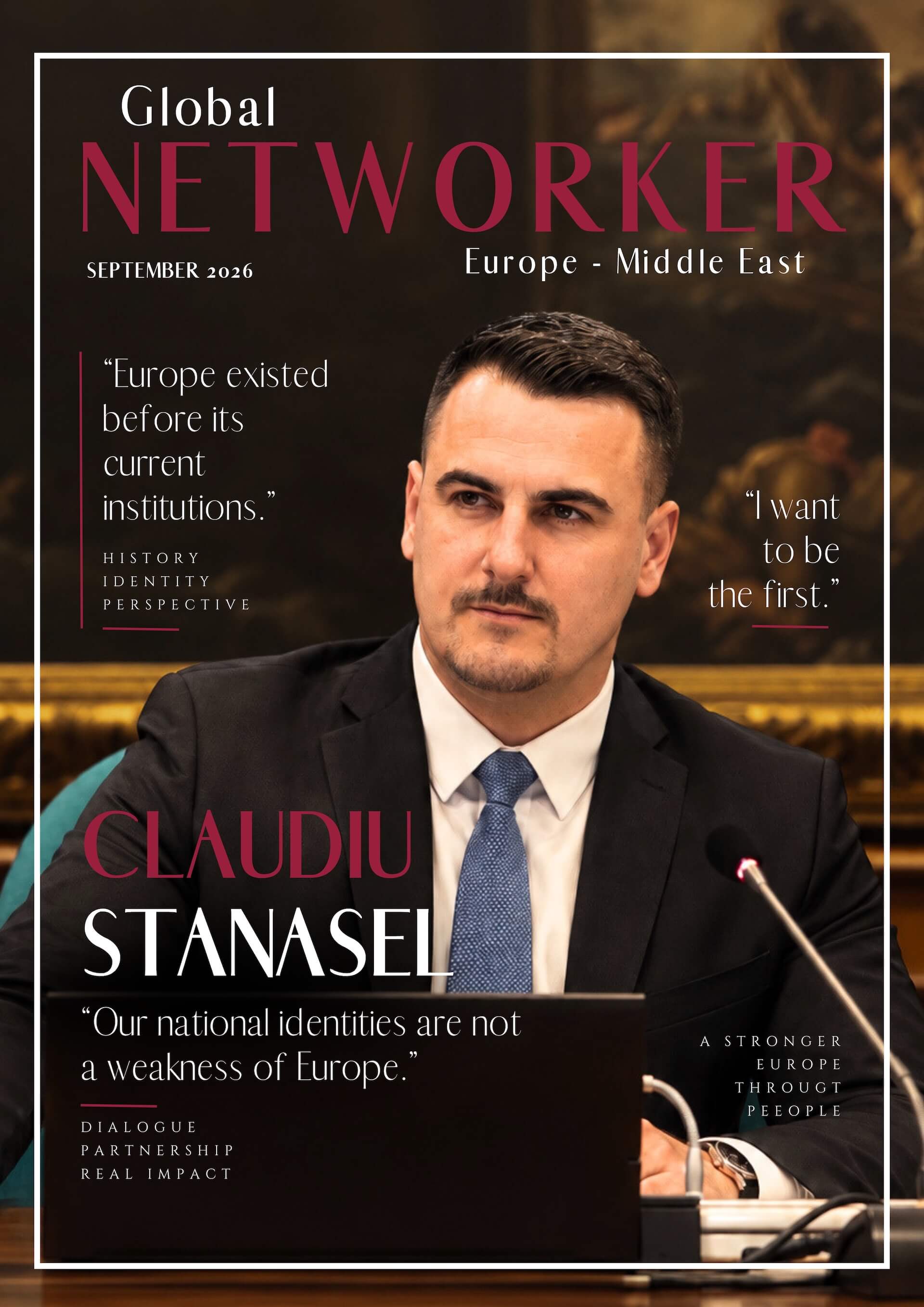
ON THE COVER: CLAUDIO STANASEL
 Text by: Marina Slobodyanik
The Italian politician and entrepreneur on migration, national sovereignty, Europe’s competitiveness, artificial intelligence — and his ambition to become the first Italian parliamentarian of Romanian origin.
Europe is at an inflection point.
Economic competition is accelerating. Artificial intelligence is transforming industries faster than governments can regulate them. Migration continues to reshape political debate. European businesses are competing for capital and talent with the United States, China, Asia and the Gulf. And a younger generation of politicians is increasingly questioning what Europe should preserve — and what it needs to change.
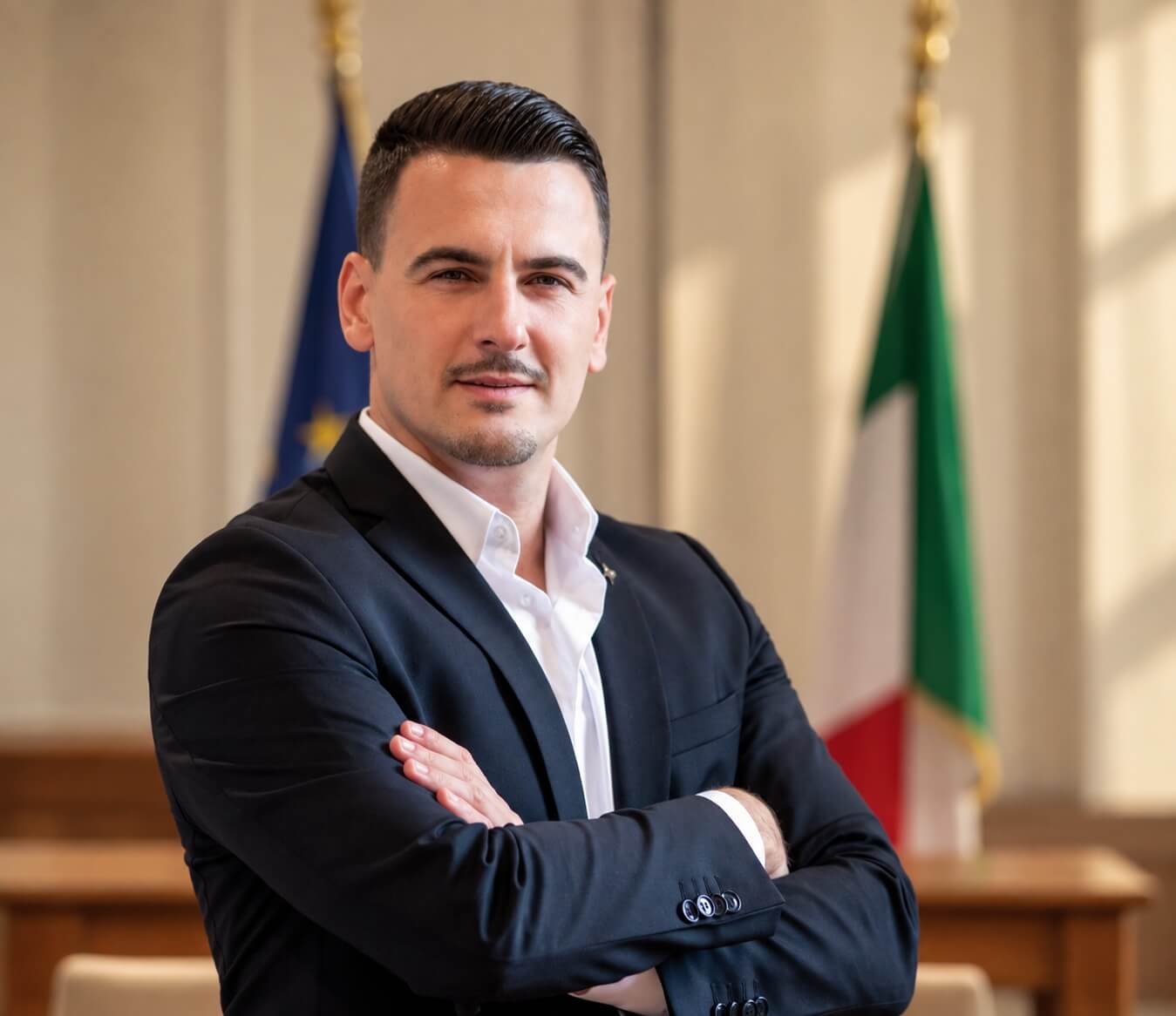
Claudiu Stanasel
Claudiu Stanasel is part of that generation.
Born in Romania and raised in Italy, Stanasel entered public life remarkably young. At 17, he became the first foreign student in the history of his school to be elected as a student representative. At 24, after receiving the highest number of votes among the candidates on his list, he was unanimously elected Vice President of Prato City Council — becoming both the youngest person and the first person born abroad to hold the position.
His story places him at the intersection of several of the most consequential debates facing Europe today: immigration and integration, national identity and European cooperation, entrepreneurship and taxation, demographic decline, technology, political polarisation and the continent’s ability to remain globally competitive.
Stanasel is also explicit about his political ambition: he wants to enter the Italian Chamber of Deputies and become the first Italian parliamentarian of Romanian origin.
In an exclusive conversation with Global Networker, Claudiu Stanasel discusses the future of Italy and Europe, why he believes strong national identities and European cooperation can coexist, what Europe can learn from Dubai, the United States and Asia, and why his generation should aspire to nothing less than a “new European Renaissance.”
“Identity and openness are not opposites.”
You were born in Romania, grew up in Italy, and today you are active in Italian politics. How has this international background shaped your worldview and political perspective?
Being born in Romania and growing up in Italy has given me a particular perspective. I know what it means to arrive in a new country, integrate, build your future there, and eventually come to feel that it is truly home.
I feel a deep sense of gratitude towards Italy and towards the people who welcomed me and supported me along the way. From teachers to classmates, many people played a part in making me feel that I belonged here.
That experience taught me that identity and openness are not opposites. You can be deeply attached to your nation while also having a European and international outlook. My roots have also allowed me, over the years, to build bridges between Italy and Romania, two countries to which I am connected in different ways.
Perhaps that is also why I tend to judge people by what they do, by their merit and by what they contribute to their community, rather than simply by where they were born.
When did you first realise that you wanted to enter politics? Was there a particular moment or event that influenced your decision?
I grew up with a certain sensitivity towards community involvement and representation. My father is the President of the Coordinamento Nazionale Cittadini Romeni in Italia, the National Coordination of Romanian Citizens in Italy, so from an early age I saw what it meant to represent a community, listen to its concerns and try to find solutions.
The moment I realised I wanted to step forward personally came during high school. At 17, while attending the Istituto Tecnico Industriale T. Buzzi, I was elected as a student representative, becoming the first foreign student in the school’s history to hold that role.
It was my first real experience of representation: listening to my classmates, understanding their concerns and trying to turn ideas and requests into tangible results.
That was when I understood something very simple: criticising what does not work is easy; taking responsibility for trying to change it is much harder. That is where my political journey began.
What is it like for a young person to build a political career in Italy today? How open is the system to a new generation of leaders?
Building a political career at a young age in Italy is not easy, but my own experience has shown me that it is possible.
At 24, after receiving the highest number of votes among the candidates on my list, I was unanimously elected Vice President of Prato City Council, in a city of around 200,000 people. I was the youngest person in the city’s history, and the first person born abroad, to hold that office.
That unanimous vote also meant something important to me. It showed that trust and institutional respect can be earned even from people who belong to very different political camps.
Opportunities do exist, but they are rarely handed to you. You have to earn them through preparation, consistency, a strong presence in the community and, above all, results.
Generational renewal should not mean giving young people responsibility simply because they are young. It should mean giving responsibility to those who prove they are ready to carry it.
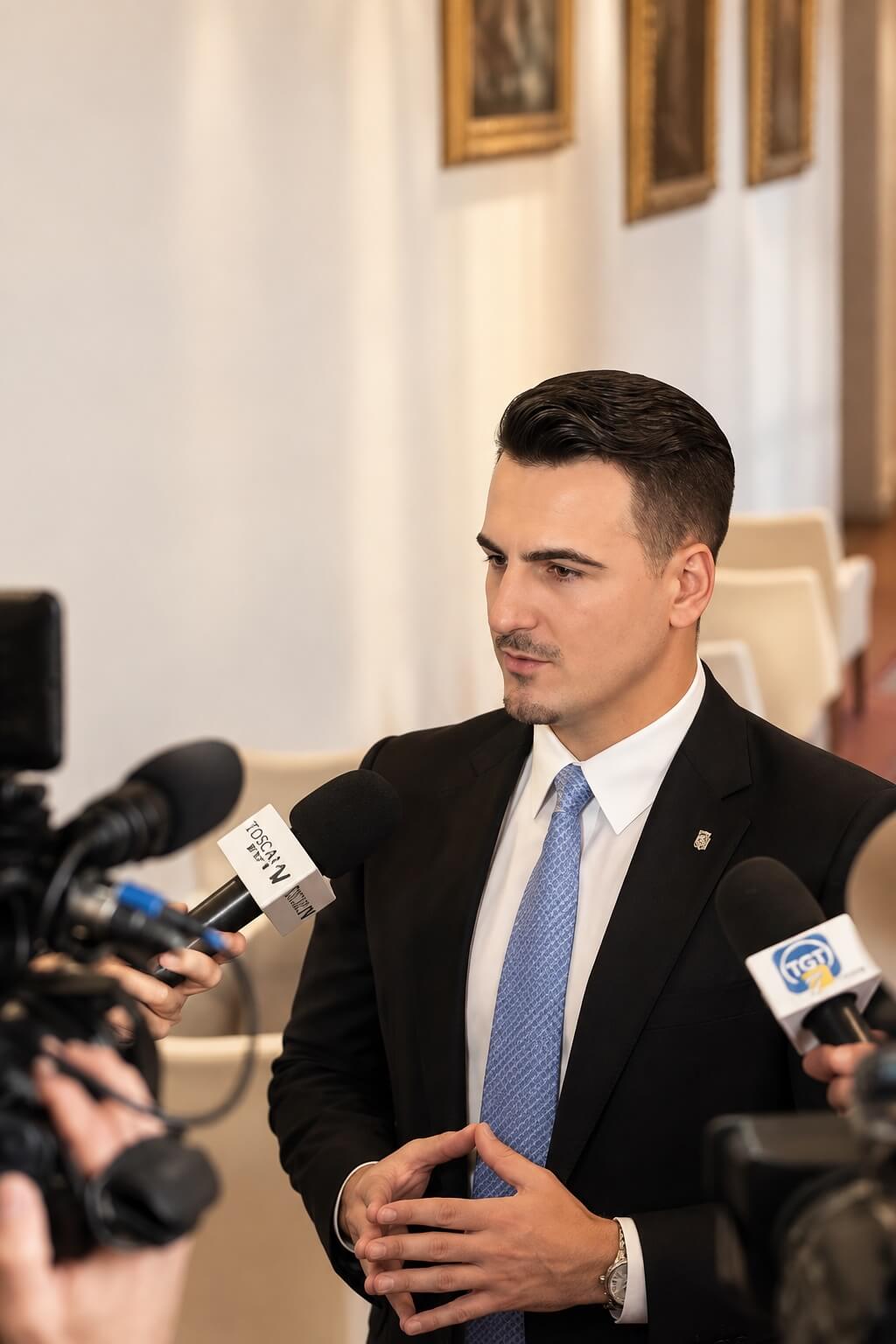
Claudiu Stanasel
Italy: Demographics, Growth and the Authority of the State
What do you see as the most serious challenges facing Italy over the next five to ten years?
I see three major challenges.
The first is demographic. We need to make it possible again for young people to build a family, own a home and imagine their future in Italy.
The second is economic. We need to free businesses and workers from some of the bureaucracy and taxation that currently hold back growth.
The third concerns the authority and effectiveness of the state: an efficient justice system, security, the rule of law, control of the territory and a serious approach to migration.
If we fail to address these three issues, we risk simply managing decline rather than creating growth.
“I believe in strong nations.”
You often speak about the future of Europe. What do you think Europe will look like in ten years: more integrated, or a union of countries with greater national autonomy?
In ten years, I would like to see a stronger Europe, but not necessarily a more centralised one.
I believe in strong nations, conscious of their identity and sovereignty, while being capable of acting together on defence, energy, security, strategic infrastructure, competitiveness and foreign policy.
I do not believe Europe’s future lies in becoming a superstate that gradually seeks to make everything uniform.
The real choice is not between more Europe and less Europe. It is between a Europe that works and a Europe that does not.
Where, in your opinion, should the balance lie between European integration and protecting the national interests of individual countries?
I would apply a very practical principle: what individual countries can do better themselves should remain at national level; what becomes more effective through common action should be addressed at European level.
The European Union can be decisive when it comes to defending shared strategic interests, competing with major global powers or protecting its external borders.
But I do not believe Brussels should intervene in every aspect of national political, economic and social life.
Italian, French, Romanian or German national interests are not necessarily opposed to the European interest. Europe works when it can reconcile them, not when it tries to erase them.
Migration, Integration and Citizenship
Migration has become one of the most sensitive political issues in Europe. What would an effective migration policy look like, one that ensures security, respects the law, and remains humane?
The starting point must be a clear distinction between legal and illegal migration.
Europe must control its borders, fight human trafficking and create legal and regulated pathways for those who have the right to enter. Those who come legally, work, respect the law and genuinely want to integrate should find clear rules and real opportunities. Those who have no right to remain should be returned within a clear and effective timeframe.
My commitment on this issue is not merely theoretical. I am a member of the national committee “Remigrazione e Riconquista”, “Remigration and Reconquest”, and I signed and supported the citizens’ initiative bill on remigration filed with the Italian Court of Cassation. I believe we need to make the removal of irregular migrants and foreign nationals who commit crimes genuinely enforceable, while at the same time strengthening serious mechanisms for managing migration flows.
Humanity and legality are not opposites. Someone who lives honestly, works and respects the country should not be placed in the same category as someone who systematically breaks its rules.
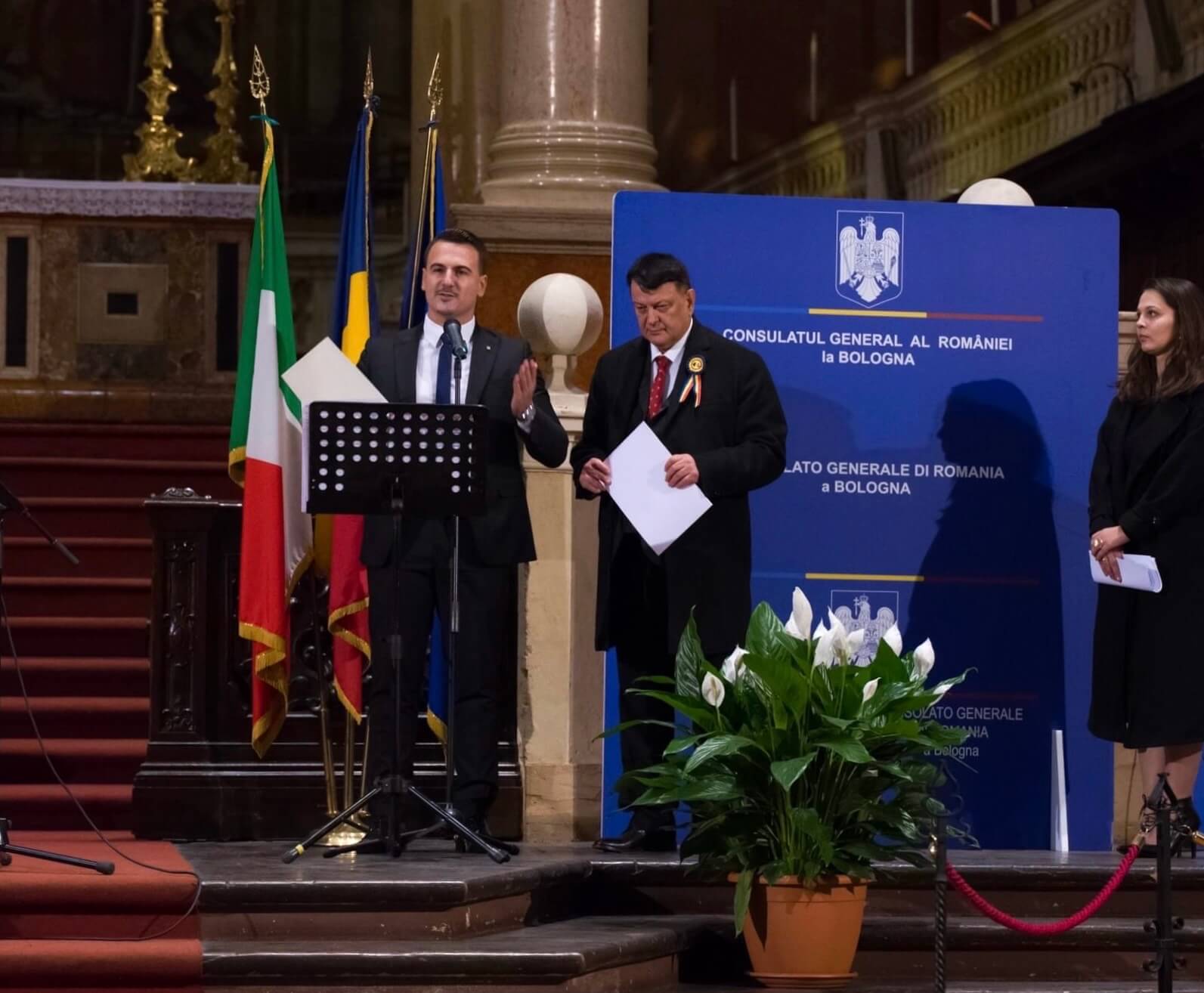
You were born outside Italy yourself. Has your personal experience influenced the way you view legal migration, integration, and citizenship?
Absolutely. I was born in Romania and came to Italy as a child, so integration is not something I understand only in theory. I have lived it.
For me, integration does not mean erasing your origins. But it does mean choosing to learn the language, respect the law, understand the culture and genuinely feel part of the society in which you live.
That is also why I see citizenship as the culmination of a real process of belonging, not as an automatic administrative entitlement.
My own story shows that integration can work. But it requires willingness, opportunity and responsibility.
In your opinion, what distinguishes successful integration from unsuccessful integration? And what responsibility should immigrants themselves have in this process?
For me, the difference is quite simple: living in a country does not automatically mean becoming part of it.
Successful integration happens when a person works, speaks the language, respects the rules, participates in the community and recognises the fundamental principles of the society that has welcomed them.
The state has a responsibility to create the right conditions, but those who arrive also have a responsibility to do their part.
When parallel communities emerge that systematically reject the language, laws or fundamental values of the host country, integration has failed.
Making Italy Competitive Again
Italy is one of Europe’s largest economies, yet entrepreneurs often point to bureaucracy, taxation, and the complexity of doing business. What needs to change for Italy to become more attractive to entrepreneurs and international investors?
I founded my own business when I was around twenty, so I know first-hand what it means to deal every day with bureaucracy, costs, investment, risk and responsibility towards the people who work with you.
Italy has extraordinary skills, creativity, industrial capacity, quality of life and a unique geographical position. Yet too often we make difficult what should be simple.
An investor should know how long an authorisation will take, what the costs will be and what regulatory environment they can expect in the years ahead.
We need less bureaucracy, a more sustainable tax burden, a faster public administration and greater regulatory certainty.
As an entrepreneur, I start from a simple principle: the state should create the conditions for those who produce and invest to move faster, not keep putting obstacles in their way.
“Europe’s problem is not a lack of talent or capital. It is speed.”
Europe is now competing not only with the United States, but increasingly with China, the Gulf states, and rapidly developing Asian economies. Is Europe losing its competitiveness?
Yes, I believe we are losing ground in some strategic sectors.
Europe’s problem is not a lack of talent or capital. It is speed.
The United States, China, the Gulf states and many Asian economies often invest, decide and experiment faster than we do.
Europe needs to focus again, with real conviction, on industry, technology, energy, research and major strategic investment.
We cannot become the continent that invents, regulates, and then watches others turn our ideas into global companies.
What does Europe need to change to ensure that young entrepreneurs, professionals, and investors want to build their future here rather than moving to Dubai, the United States, or Asia?
We need to make Europe a place where building your future is attractive again.
When a young entrepreneur looks to Dubai, the United States or Asia, they are often looking for speed, access to capital, competitive taxation and an environment that rewards initiative.
Europe must be able to offer those opportunities without giving up its own social model.
There also needs to be a cultural shift. Success should not be viewed with suspicion. People who take risks, invest, create jobs and innovate generate value for society as a whole.
If we want to keep talent in Europe, offering security is not enough. We must offer opportunity.
Artificial Intelligence and the Next Economy
How important will technology, artificial intelligence, and digitalisation be to the future of the Italian economy? Is Italy’s political system prepared for the speed of these changes?
Artificial intelligence and digitalisation will transform our economy, and I believe one of Italy’s priorities must be to bring these technologies into the real fabric of our businesses.
Italy has hundreds of thousands of small and medium-sized companies. The challenge is not to talk about AI at conferences, but to make sure that a small manufacturing company, a professional or even an artisan can use it to become more productive and competitive.
Politics is currently moving more slowly than technology. It needs to learn how to create rules without turning them into barriers.
We cannot stop this revolution. We can decide whether we want to lead it or simply be carried along by it.
Politics in the Social-Media Era
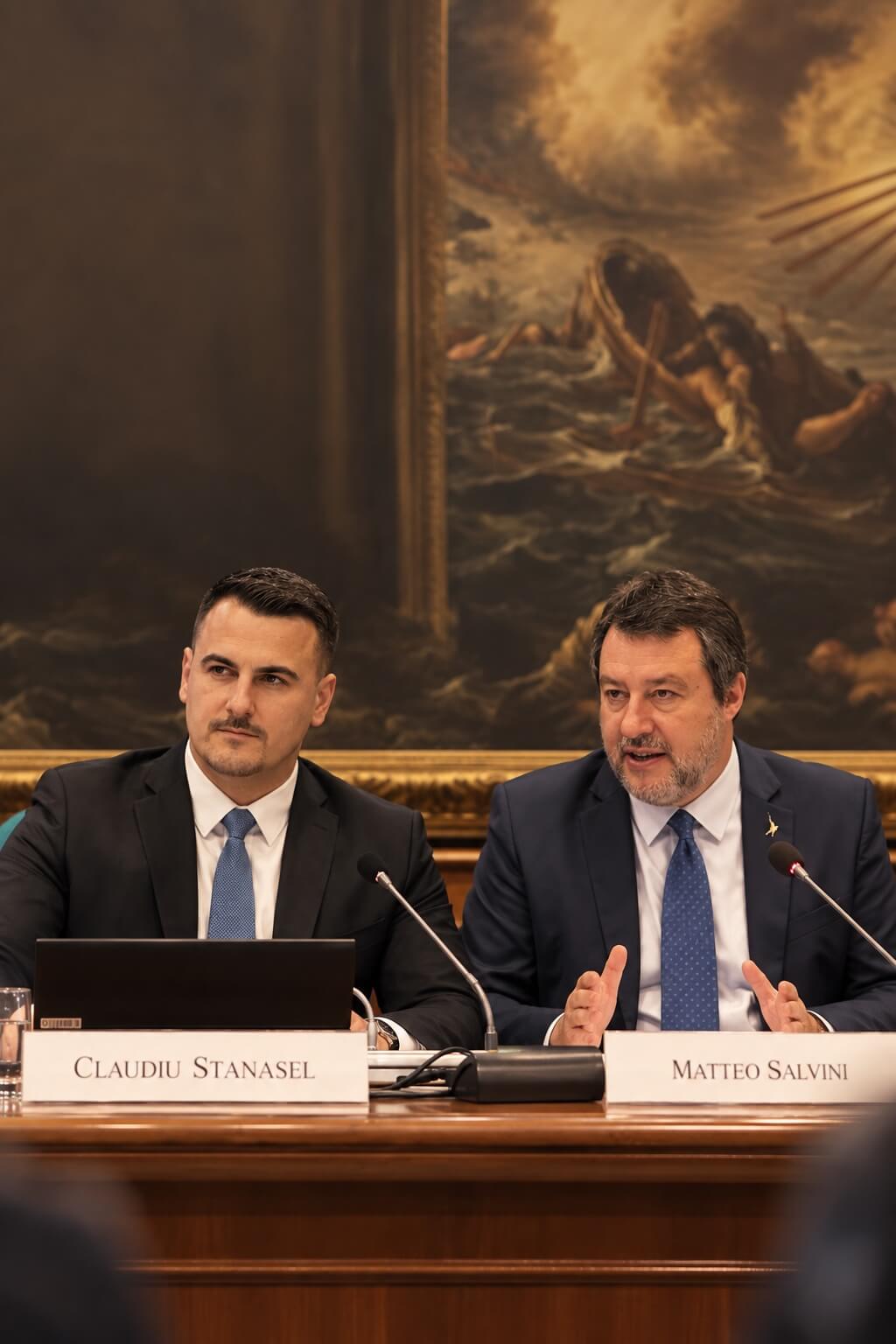
Claudiu Stanasel, Matteo Salvini
Social media has completely transformed politics. Politicians can now communicate directly with millions of people without traditional media. Has this made politics more democratic or more populist?
Social media has democratised political communication, but it has also changed the incentives behind it.
Today, you can reach millions of people directly. At the same time, you know that a few seconds of video, a slogan or a confrontation can attract far more attention than a complex argument.
Because I use these platforms every day, I see both sides. They create an extraordinary opportunity for direct communication, but they can also push everyone towards increasingly extreme forms of messaging.
The responsibility of a politician is not to confuse what generates the most engagement with what actually matters most.
You are very active on social media. How important is it for you to communicate directly with people rather than only through traditional political institutions and the media?
Instagram and Facebook have become two central tools in my relationship with people.
I obviously use them to explain what I am doing and communicate my positions, but the part I find most valuable is what comes back in the other direction. Comments, criticism, messages, ideas and reports from citizens allow me to understand, every day, what is happening outside institutional buildings.
Political communication cannot be purely top-down.
When used properly, social media can genuinely reduce the distance between a public representative and the people they represent.
Modern politics is becoming increasingly polarised. Is it still possible to hold strong political convictions while maintaining a constructive dialogue with people who fundamentally disagree with you?
One of my first major projects was called “I Giovani incontrano la Politica”, “Young People Meet Politics”.
It took me into more than 300 high schools across Italy and put me in front of thousands of students.
Those assemblies were built around democratic debate in which very different ideas, sometimes completely opposed ideas, had to be defended openly and judged on their merits.
That experience taught me that strong convictions and dialogue are not incompatible.
The real problem begins when we stop seeing someone as an opponent we can debate and start treating them as an enemy who must be delegitimised.
What Does It Mean To Be European?
What does being European mean to you today? Is it primarily about geography, culture, shared values, or political identity?
For me, being European means first and foremost belonging to a civilisation.
Europe existed before its current institutions. It is history, culture, freedom, traditions, science, art, law and a shared heritage built over centuries.
You can be profoundly Italian, Romanian, French, Hungarian or Spanish and at the same time fully European. I see no contradiction in that.
Our national identities are not a weakness of Europe. They are an essential part of its richness.
Which European values do you believe are particularly important to protect today?
If I had to choose just a few, I would say freedom, the rule of law, individual responsibility and respect for the identity of Europe’s peoples.
I would also add the possibility for people to shape their own destiny through merit, work and individual initiative. I do not see these values simply as an inheritance from the past. They must remain living principles capable of guiding the choices we make over the coming decades.
That is also why I signed and actively support the Save Europe Act. I share its goal of bringing national sovereignty, border security and the protection of the identity and cultural continuity of Europe’s peoples back to the centre of the European debate.
Knowing your roots does not mean living in the past. It means knowing what you want to carry with you into the future.
Three Things He Would Change in Italy
If you had the power to change only three things in Italy today, what would they be?
Three things.
First, make it possible again for young people to build a life in Italy, with work, a home, a family and genuine professional growth.
Second, free those who produce and invest from some of the bureaucracy and taxation that weigh them down.
Third, build a more authoritative and effective state, with faster justice, greater security and rules that are actually enforced.
They are three different challenges, but they have one thing in common: restoring confidence in the future.
“I Want To Be The First.”
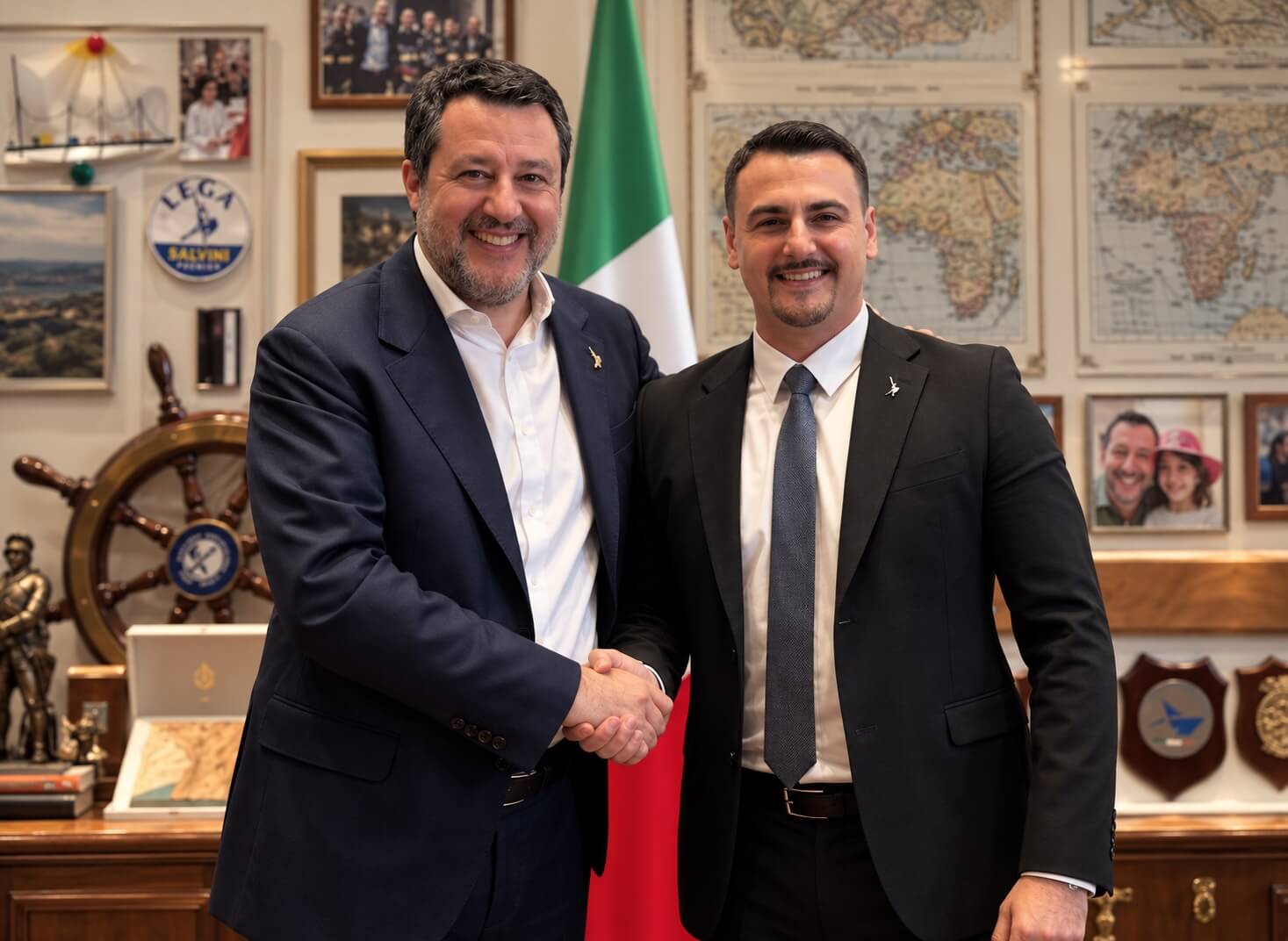
Matteo Salvini, Claudiu Stanasel
What are your own political ambitions? Where do you see yourself in ten years?
I have a very clear political goal, and I have already stated it publicly: to become a member of the Italian Chamber of Deputies and the first Italian parliamentarian of Romanian origin in our country’s history.
I do not see this simply as a personal ambition. The Romanian community in Italy numbers more than one million people and, despite its size and the contribution it makes to the country every day, it has never had one of its own members in the Italian Parliament.
I want to be the first.
For me, that would have enormous symbolic meaning. It would show that someone born elsewhere, raised and fully integrated in Italy, can reach the country’s highest institutions through work, public support and merit.
It would also be a way of giving something back to the country that welcomed me and gave me the opportunity to build my life here.
And I certainly do not see that as the limit of my ambitions.
Alexander the Great and Leadership
Is there a political leader, contemporary or historical, whose leadership style has particularly influenced you?
More than any contemporary politician, there is one historical figure who has fascinated me since childhood: Alexander the Great.
I have read a great deal about his life, and I have always been struck by his vision, determination and ability to inspire people to pursue goals that seemed impossible.
My favourite film is Oliver Stone’s “Alexander”. I have genuinely watched it more than a hundred times.
Of course, we are talking about a man who lived more than two thousand years ago, in a completely different world. But some elements of leadership are timeless: vision, courage, discipline, responsibility and the willingness to lead from the front.
Beyond the Political Persona
What do people most often misunderstand about you when they only see your political statements or social media posts?
Perhaps they underestimate how curious I am.
People who know me only through a political statement or a social media video mainly see the most decisive part of my character: my convictions, my political battles and the confrontations that come with them.
In real life, however, I spend a great deal of time listening, reading, browsing, researching and trying to understand things I do not yet know, including ideas I disagree with.
I have never been afraid to revise an opinion when reality proves me wrong. Having strong principles does not mean believing you already know everything.
Who is Claudiu Stanasel outside politics? What matters most to you when the cameras are off and the working day is over?
Outside politics, I have many passions and interests. I am an extremely curious person.
I love travelling, exploring new places, going to the cinema, dancing, playing video games, browsing the internet, reading and watching documentaries. More than anything, I enjoy constantly learning something new.
Of course, I also try to make time for my family, my friends and the relationships that genuinely matter to me.
I think it is important not to allow a public role to become your entire identity. Politics occupies an enormous part of my life, but it is not everything I am.
Legacy
What legacy would you like to leave behind, not only as a politician, but also as a person?
I would like to leave behind the sense that I opened doors and, above all, that I built something concrete.
One project I care deeply about is the proposal I wrote to amend Law 482 of 1999 in order to recognise the Romanian community as a national minority in Italy. It was formally filed in both the Chamber of Deputies and the Senate by members of Lega and presented in Rome at a press conference together with Minister Matteo Salvini.
Whatever roles I may hold in the future, I want my political journey to produce results that can endure beyond me.
And as a person, I would like to prove one thing: where you are born should never define the limits of what you can become.
If my story can make even one other person think, “Then maybe I can do it too,” that would already be a meaningful legacy.
“Our Generation Should Not Simply Inherit Europe.”
If you could send one message to the younger generation of Europeans today about the future of our continent, what would it be?
I would tell young Europeans that our generation needs a clear mission: to build a new European Renaissance.
Europe has already changed the world through culture, science, art, enterprise, exploration and innovation. There is no reason why our continent should now be content simply to live off the achievements of its past.
We need ambitious, prepared and curious young people, people who study, travel, build companies, enter public life, defend their identity and are willing to take risks.
Our generation should not simply inherit Europe. It should build a new European Renaissance.
A continent that is freer, stronger, more competitive and once again confident in itself.