Creating Light in Times of War
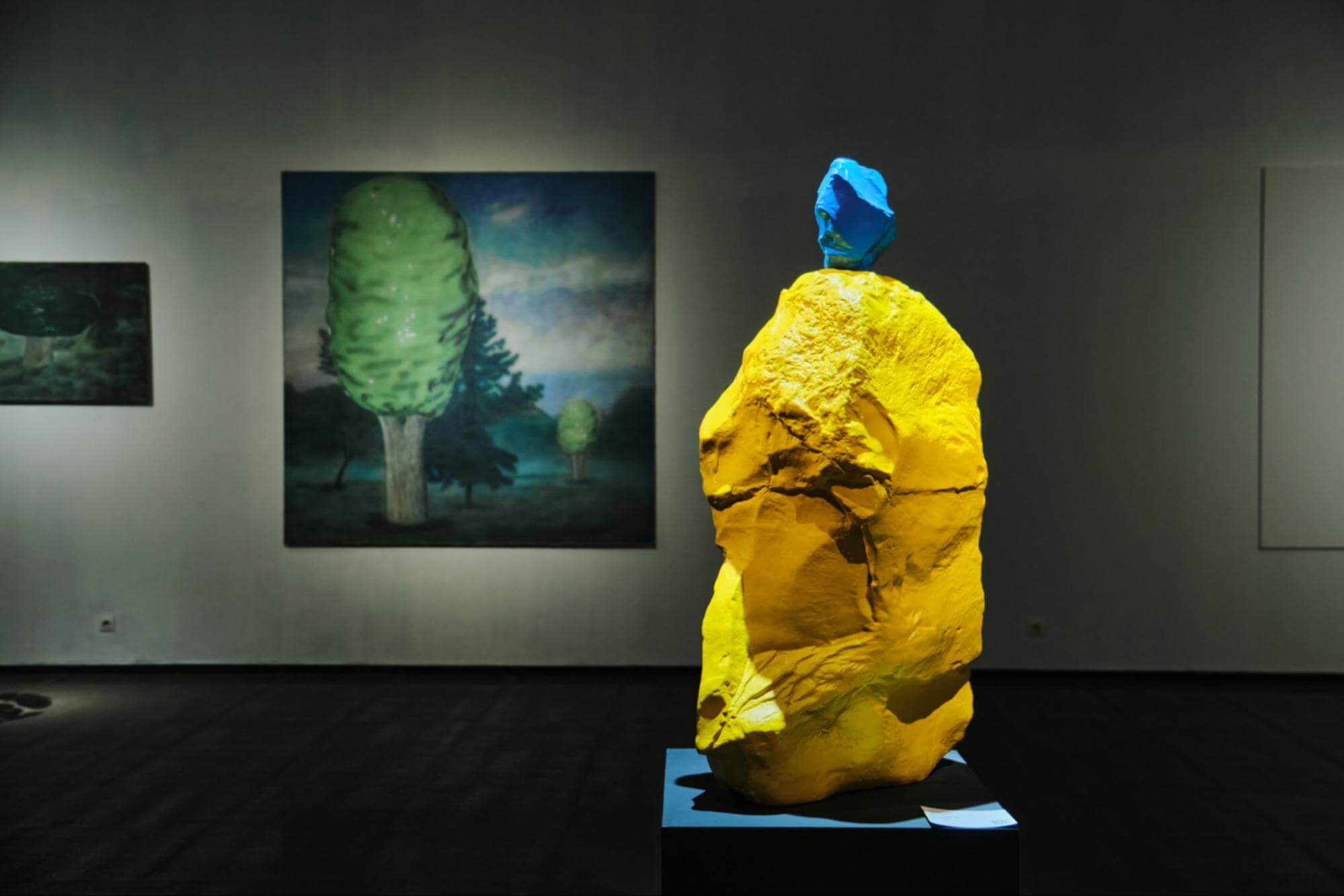
Ugo Rondinone, Monk; Yuriy Syvyryn, Untitled
At M17 Contemporary Art Center, in the very heart of Kyiv, the capital of a country gripped by war, a new exhibition, Beyond the Shadow, brings together voices from across borders to explore space, time, and reality.
Presented in the midst of war, the show might seem, at first glance, a gesture of abstraction. Yet in Ukraine today, culture itself has become a form of defence and resilience – a means of preserving a vision of peaceful life, and of keeping a hope of a new reality alive.
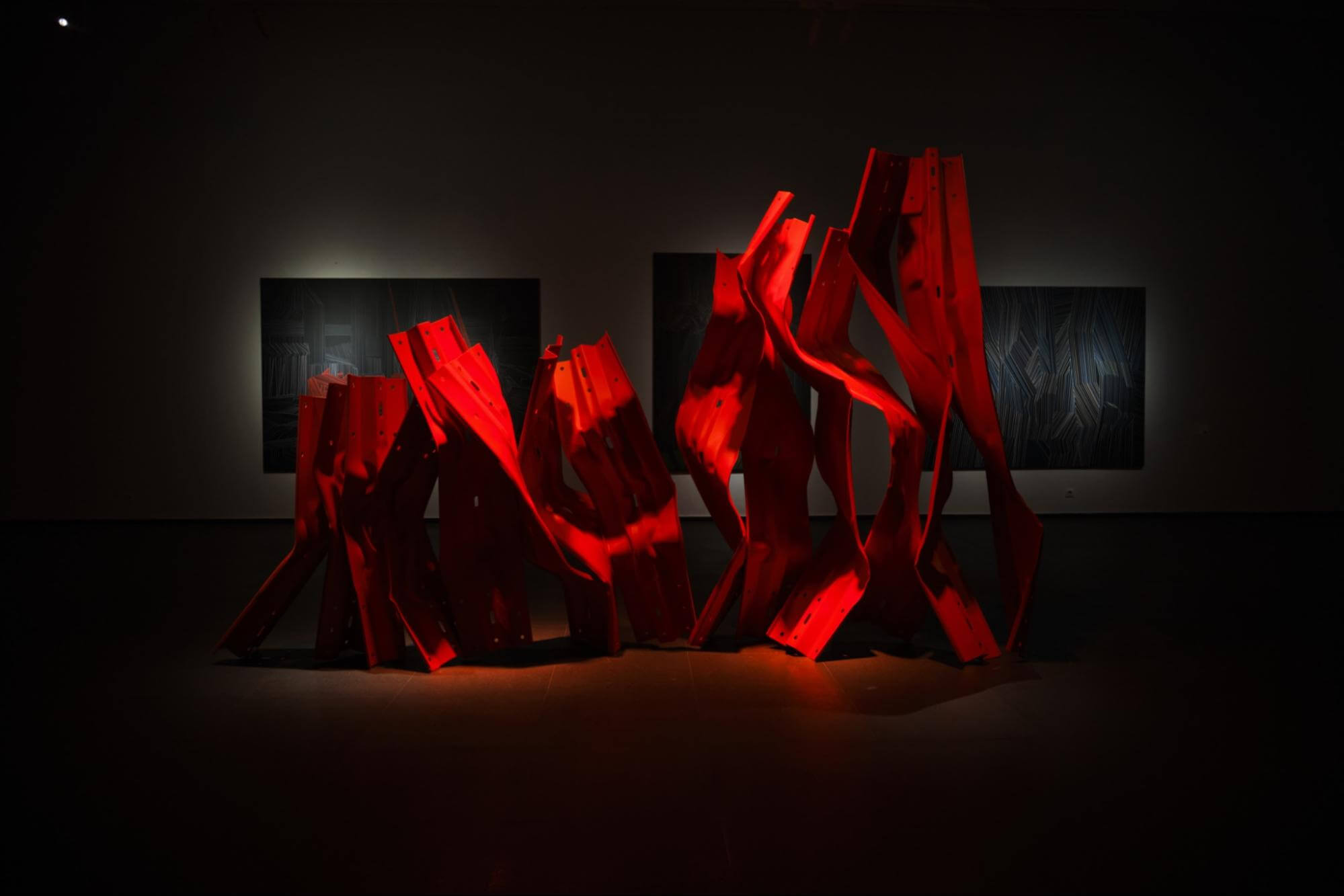
Bettina Pousttchi, Vertical Highways
The works of contemporary artists presented in the Beyond the Shadow project serve as a portal to dimensions transcending the ordinary, inviting viewers to discover new perspectives beyond their own worldview. The exhibition itself serves as a rethinking space of fundamental concepts that shape the human vision of the world and define the boundaries between the real and the imagined, unveiling new horizons of existence.
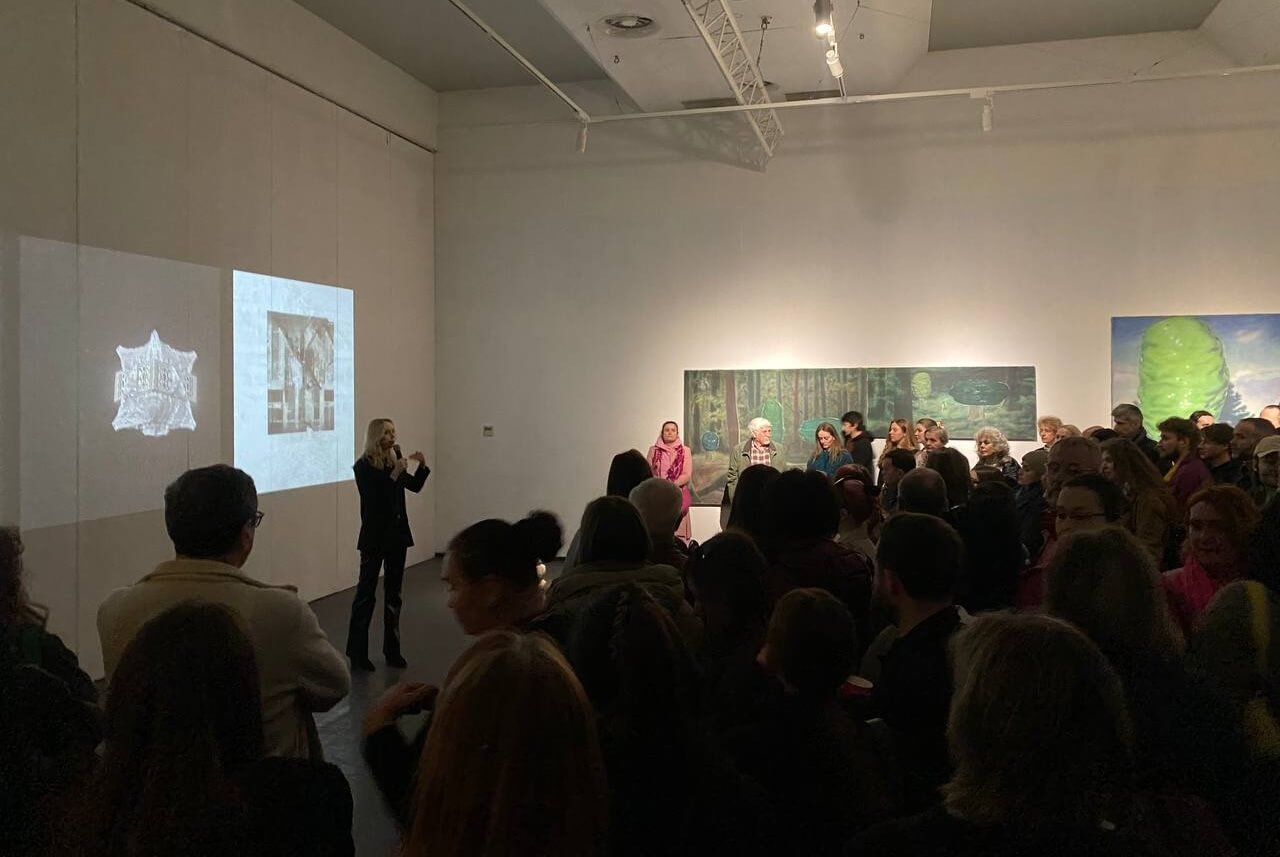
Opening of the exhibition, visitors of the M17 CAC
The exhibition features artworks by acclaimed Ukrainian and international artists – including Daniel Arsham, Nazar Bilyk, Kateryna Buchatska, Diana Demyanenko, Olena Dombrovska, Zhanna Kadyrova, Anish Kapoor, Alicja Kwade, Vartan Markarian, Serhiy Nizhynsky, Serhiy Popov, Bettina Pousttchi, Sergii Radkevych, Ugo Rondinone, Kostyantyn Rudeshko, Yuriy Syvyryn, Myroslav Vayda, and VJ Yarkus – whose creations serve as metaphysical gateways into the evolving nature of space, time, and reality. Organised by M17 CAC and curated by Natalia Shpytkovska, the art show becomes more than a gallery space – it becomes a field of reflection, resistance, and transformation.
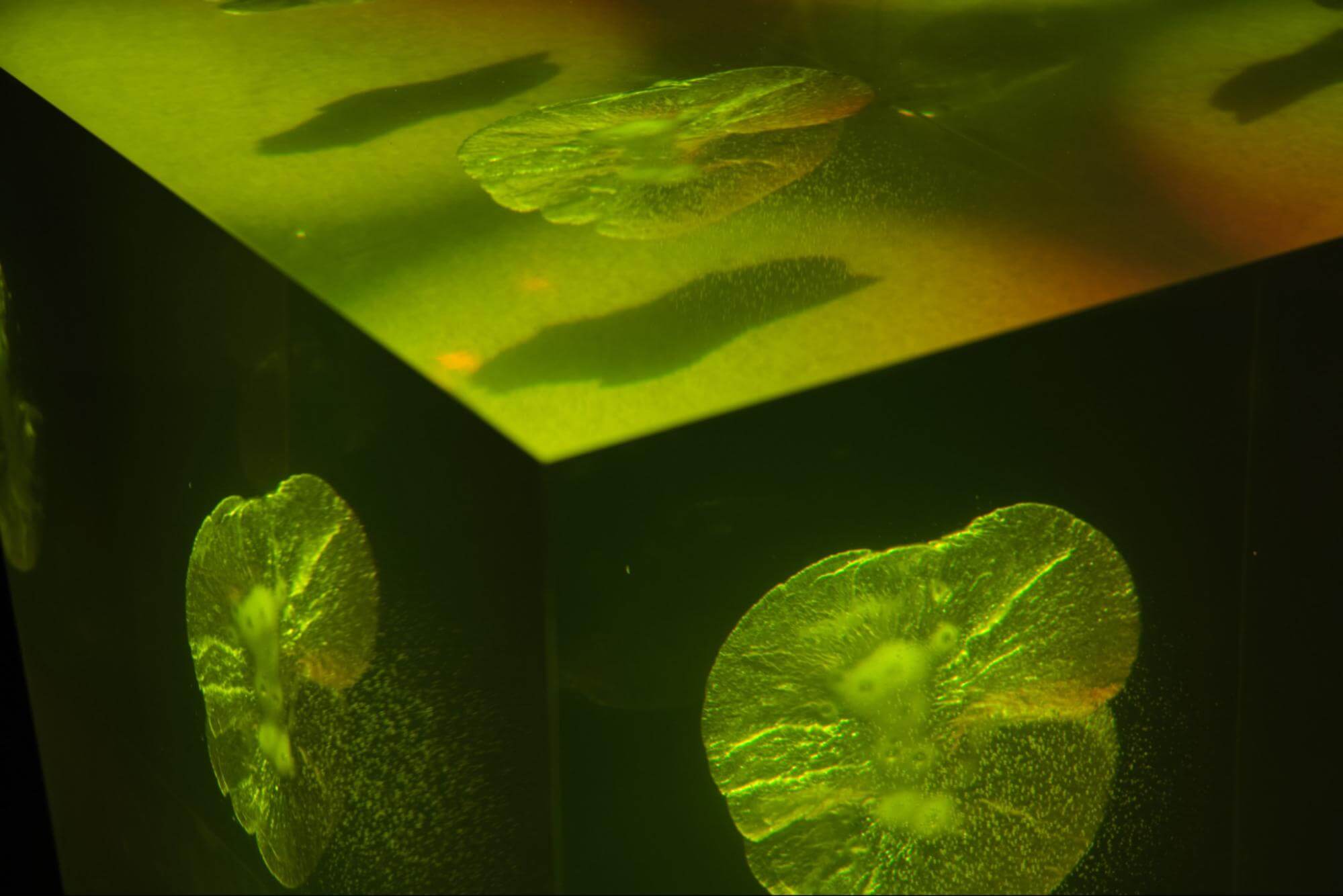
Anish Kapoor, Space as an object (fragment)
This is a rare opportunity to witness, within a single space, the works of both celebrated Ukrainian and international artists, ranging from renowned figures to those presenting in Ukraine for the first time. Notably, world-acclaimed artists Ugo Rondinone and Alicja Kwade are making their Ukrainian debut. The set becomes a platform for cultural dialogue across nations, generations, and ways of thinking. This dialogue resonates especially in the interplay of Ukrainian and international voices: their artistic visions often unfold in parallel, intersecting or mirroring one another with striking synchronicity.
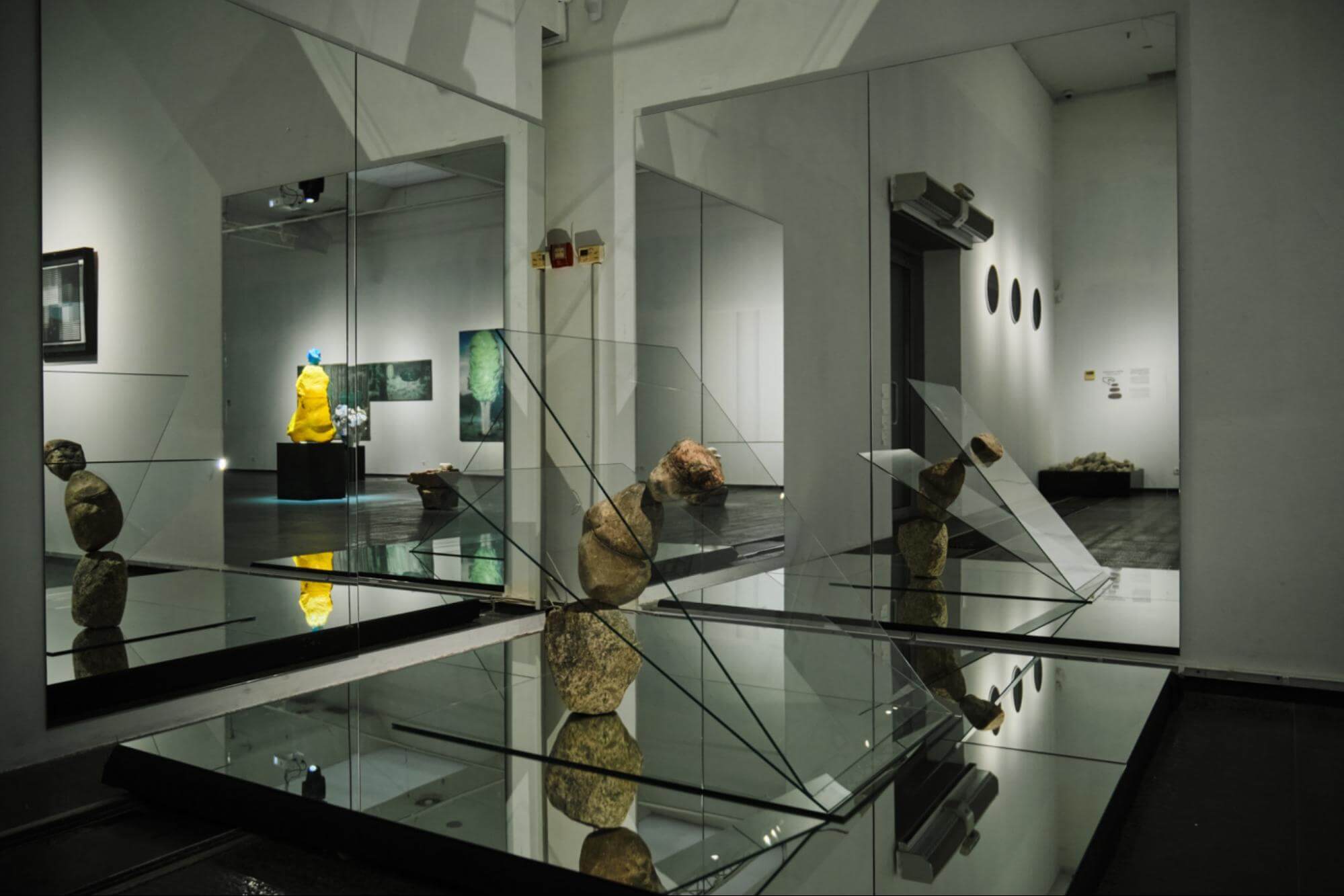
Alicja Kwade, Unrestrained Resistance
The exhibition is not an escape from the real, but an entry point into deeper dimensions of perception. The show blurs the thresholds between physical and metaphysical, visible and invisible. Viewers experience Markarian’s hypnotic video installation “Look Around,” inviting a descent into memory and subconscious imagery.
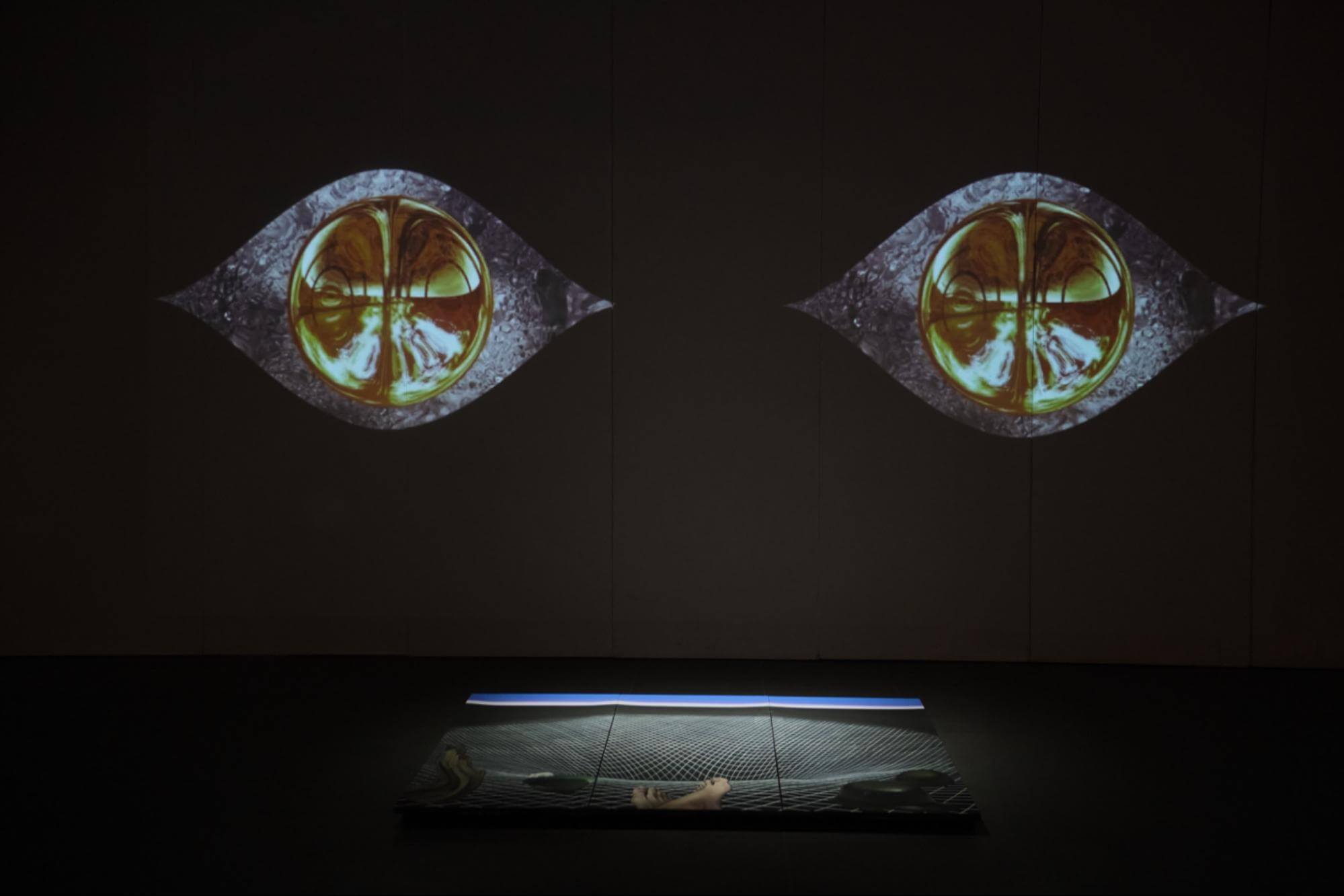
Vartan Markarian, “Look Around”, Sergii Radkevych, Triptych from the series “30 meters above sea level”
At another juncture, visitors are encouraged to build their own stone totems beside Rondinone’s contemplative “Monk,” a simple but poignant act of tribute, memory, or hope. Kapoor’s iconic voids challenge the nature of materiality itself, while Kwade’s use of distortion and reflection compels the viewer to reconsider their perceptual certainties, Syvyryn explores sensitivity to invisible impulses of reality, showing how art, like birds sensing an approaching storm, emerges from the shadow of the unknown, responding to hidden shifts and transforming them into visual symbols and metaphors. Through light, mirrors, sonic textures, and architectural interventions, the exhibition transcends the white cube and immerses visitors in a multidimensional experience of becoming.
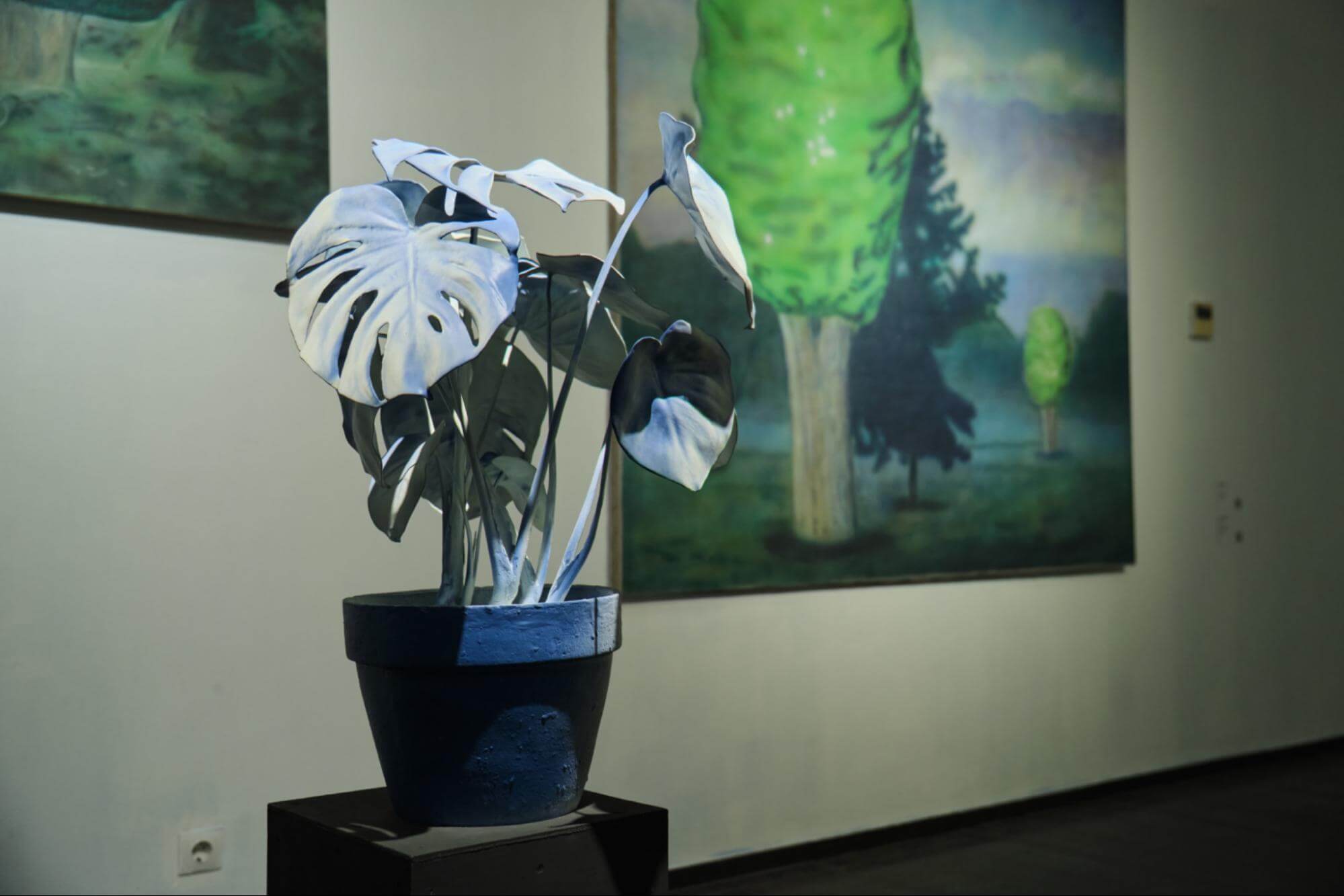
“In Ukraine today, culture is not a luxury – it is a necessity. It gives people a reason to endure, a structure to hold onto, and a vision of the future worth living for,” states Natalia Shpytkovska, Director of the M17 CAC, initiator, and curator of the Beyond the Shadow project.
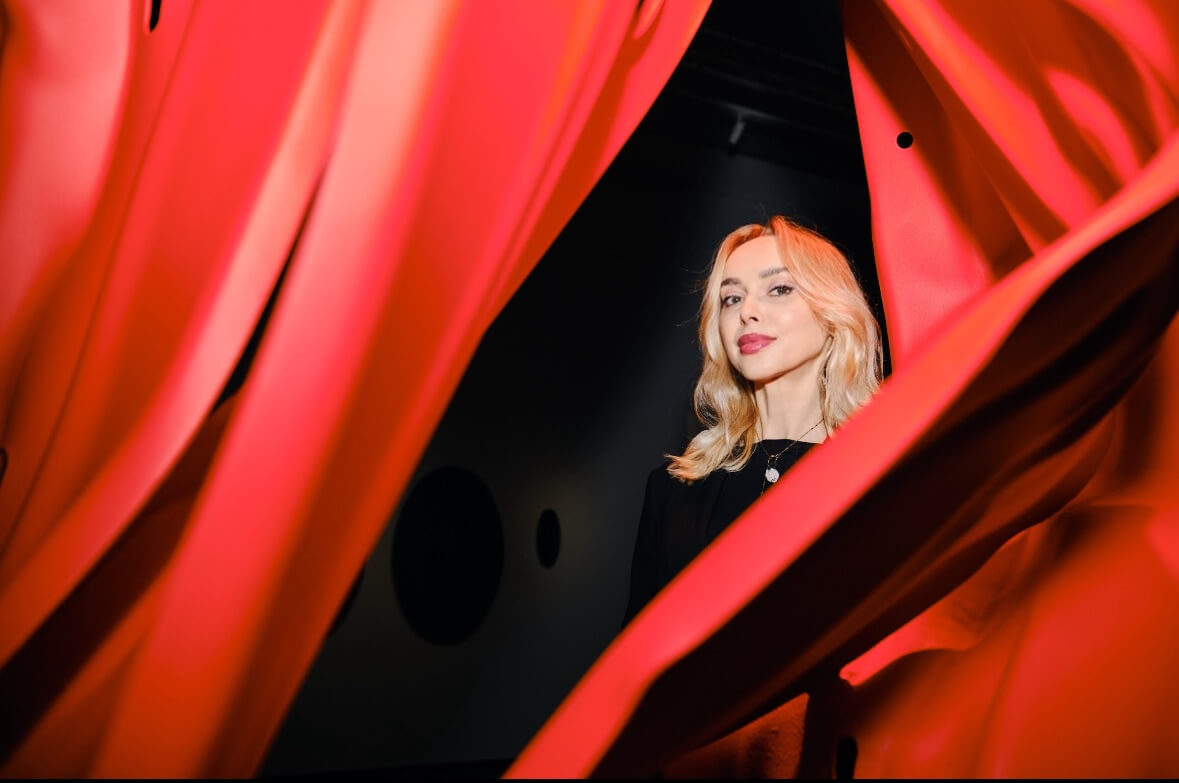
Natalia Shpytkovska, Director of the M17 CAC, and curator of the Beyond the Shadow project
As global crises – from war and climate collapse to pandemics – reshape the human condition, the fundamental understanding of time, space, and reality is undergoing a profound shift today. Space is no longer just a physical territory people strive to protect, but also an inner dimension of human experience: a realm of personal boundaries, safety, and freedom. It is a space of thought where meaning is formed, decisions are made, and ideas are born. Time has become deeply subjective; as suggested by Einstein, it is a fourth dimension.
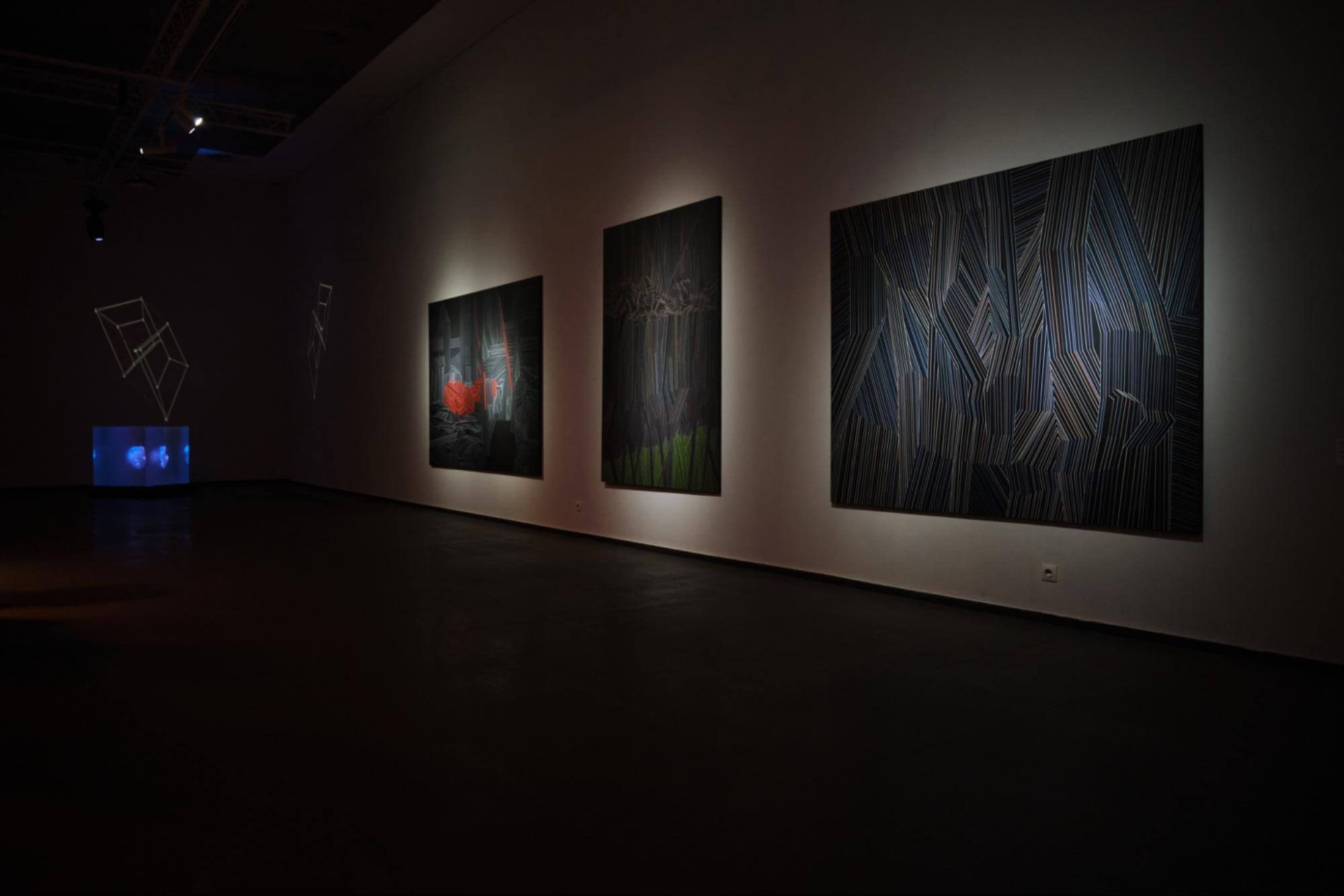
Olena Dombrovska, Untitled; Anish Kapoor, Space as an Object and VJ Yarkus, Hypercube: Dimensions of Infinity
To what extent, then, are the concepts of space, time, and reality relevant today in times of war in Ukraine? For some, war feels endless; for others, three years have passed like a single day. People inhabit a temporal distortion where waiting, pain, and hope intertwine. Reality becomes layered: it is personal, shaped by the individual perception; informational, influenced by media and social networks; and collective, shared through society’s common experience. Imagination, memory, and dreams – all form part of this multifaceted reality.
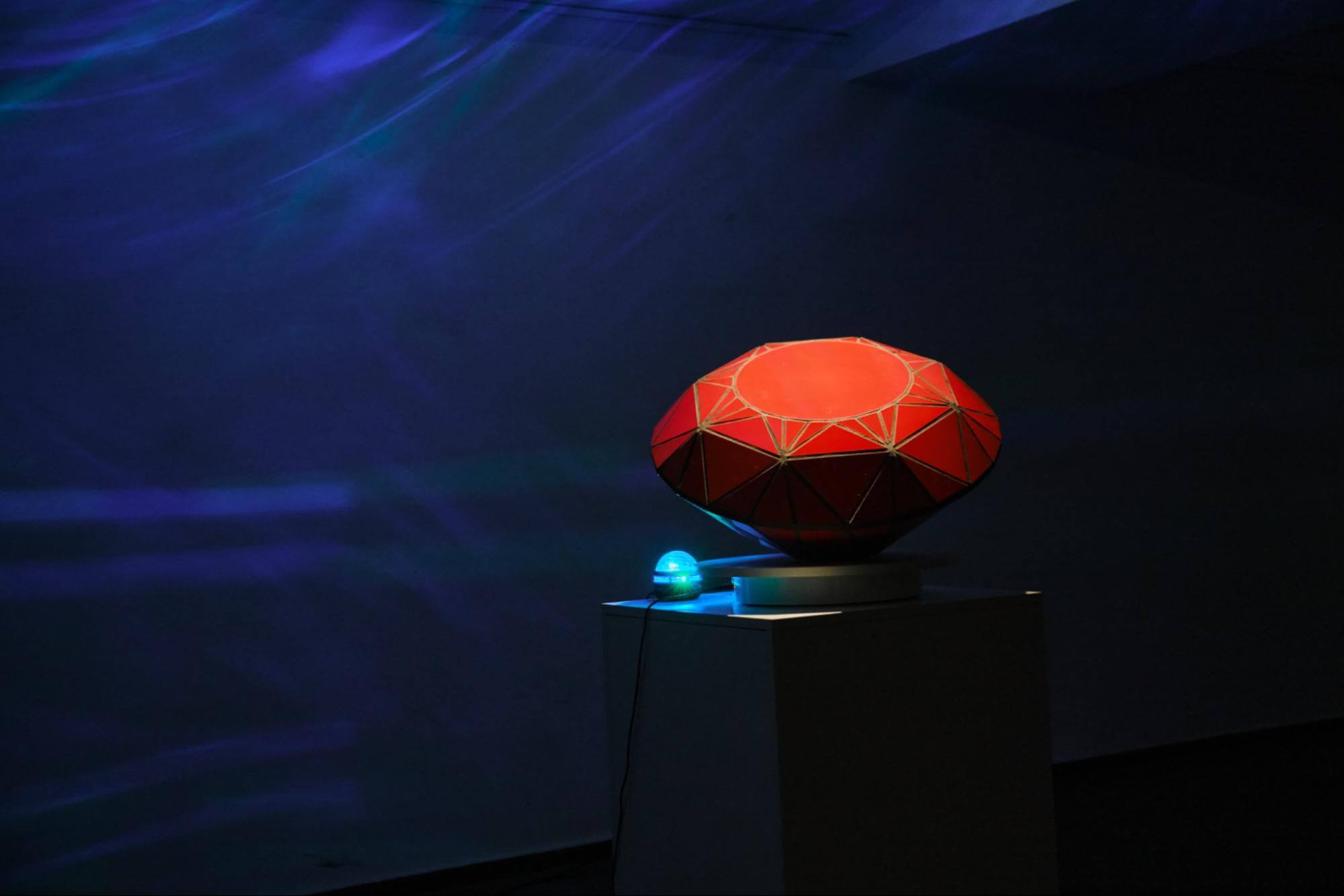
Zhanna Kadyrova, Diamond
Perhaps we are already living through a profound transition into alternate realities. So much that once existed only in the imagination is now part of the lived experience of a human being. It only took the courage to envision – and believe in – the impossible. It is a reminder that from darkness, new forms can emerge. And from the shadow, light can still be shaped.
The exhibition reveals to viewers the complexity and vulnerability of the modern world in the context of war, the search for identity, and change, while at the same time fostering hope.
Beyond the Shadow reminds us that we are all responsible for our inner world, for the ecology of our thoughts, and ultimately for our common future.
The exhibition is supported by the Adamovskiy Foundation.