RONALDINHO & FRIENDS VS COPA PELÉ: HOW FOOTBALL LEGENDS ARE TURNING NOSTALGIA INTO A MODERN SPORTS BUSINESS
 Text by: Marina Slobodyanik
On September 26, 2026, Ronaldinho will lead a line-up of international football names at Wörthersee Stadion in Klagenfurt, Austria. But behind the spectacle sits a broader business proposition—one built around football heritage, live entertainment, hospitality, sponsorship and the enduring commercial value of sporting icons.
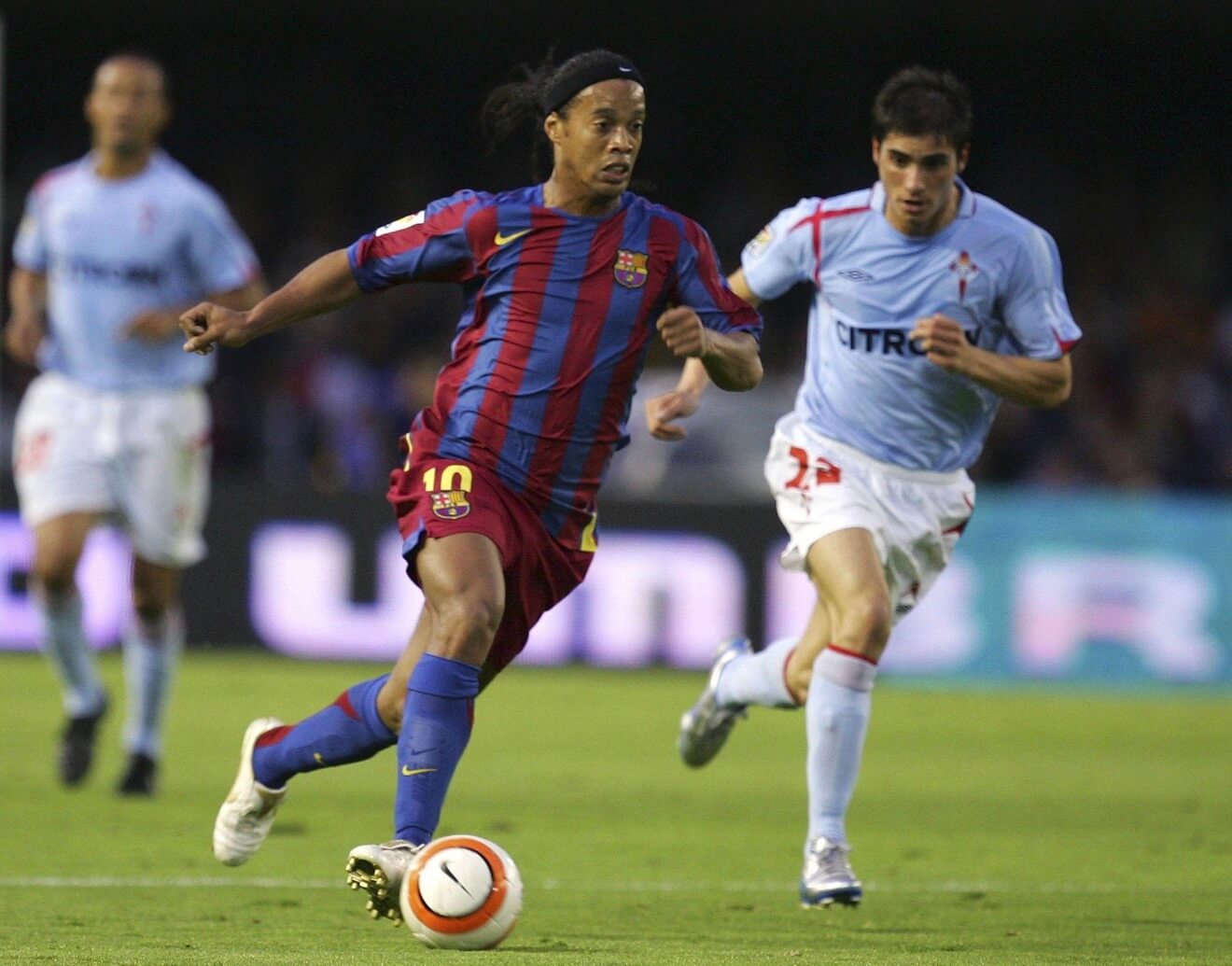
There are few footballers whose names transcend the sport quite like Ronaldinho.
Nearly two decades after the peak of a career that included a FIFA World Cup, the UEFA Champions League and the Ballon d’Or, the Brazilian remains one of football’s most internationally recognisable personalities. His relevance now extends beyond trophies and statistics: Ronaldinho has become a global sporting brand whose appeal crosses generations, markets and digital platforms.
On September 26, 2026, that appeal will arrive in Austria as Ronaldinho & Friends face Copa Pelé at Wörthersee Stadion in Klagenfurt.
The event, organised by YEA Event and ASG Sports Consultancy & Projects, will bring together an international roster of former football stars for a large-scale sports and entertainment experience in the heart of Carinthia.
And while Ronaldinho provides the headline, the business model surrounding the match tells a wider story about the changing economics of football.
A Global Line-Up
The confirmed roster brings together players representing several generations and some of the most recognisable clubs and national teams in international football.
Alongside Ronaldinho, the line-up currently includes Wesley Sneijder, Roberto Assis, Ronald de Boer, Valter Birsa, Juan Pablo Sorín, Bruno Alves, Hernanes, Maicon, Giorgos Karagounis and Marcos Tavares.
A further high-profile addition is expected, with organisers confirming that a legendary goalkeeper will also join the event. His identity is yet to be announced.
The names carry significant football pedigree.
Wesley Sneijder was central to Inter Milan’s historic treble-winning season in 2009–10 and helped take the Netherlands to the 2010 FIFA World Cup final.
His former Inter teammate Maicon became one of the defining right-backs of his generation, winning the Champions League as part of the same side.
Ronald de Boer brings another chapter of Dutch football history, having represented Ajax, Barcelona and the Netherlands during a distinguished career.
Portugal international Bruno Alves was part of the squad that won UEFA Euro 2016, while Giorgos Karagounis was a central figure in Greece’s remarkable Euro 2004 victory.
Brazilian international Hernanes spent much of his European career in Serie A, while Slovenia’s Valter Birsa also established himself in Italian football, including a period with AC Milan.
Former Argentina captain Juan Pablo Sorín represented his country at two FIFA World Cups and played across an unusually international collection of major clubs, including Juventus, Barcelona, Paris Saint-Germain, Lazio and Villarreal.
Marcos Tavares, meanwhile, became one of the defining figures of Slovenian club football through his long association with NK Maribor.
Together, the roster gives the event something increasingly valuable in the modern attention economy: recognisable sporting identities with audiences extending well beyond their home markets.
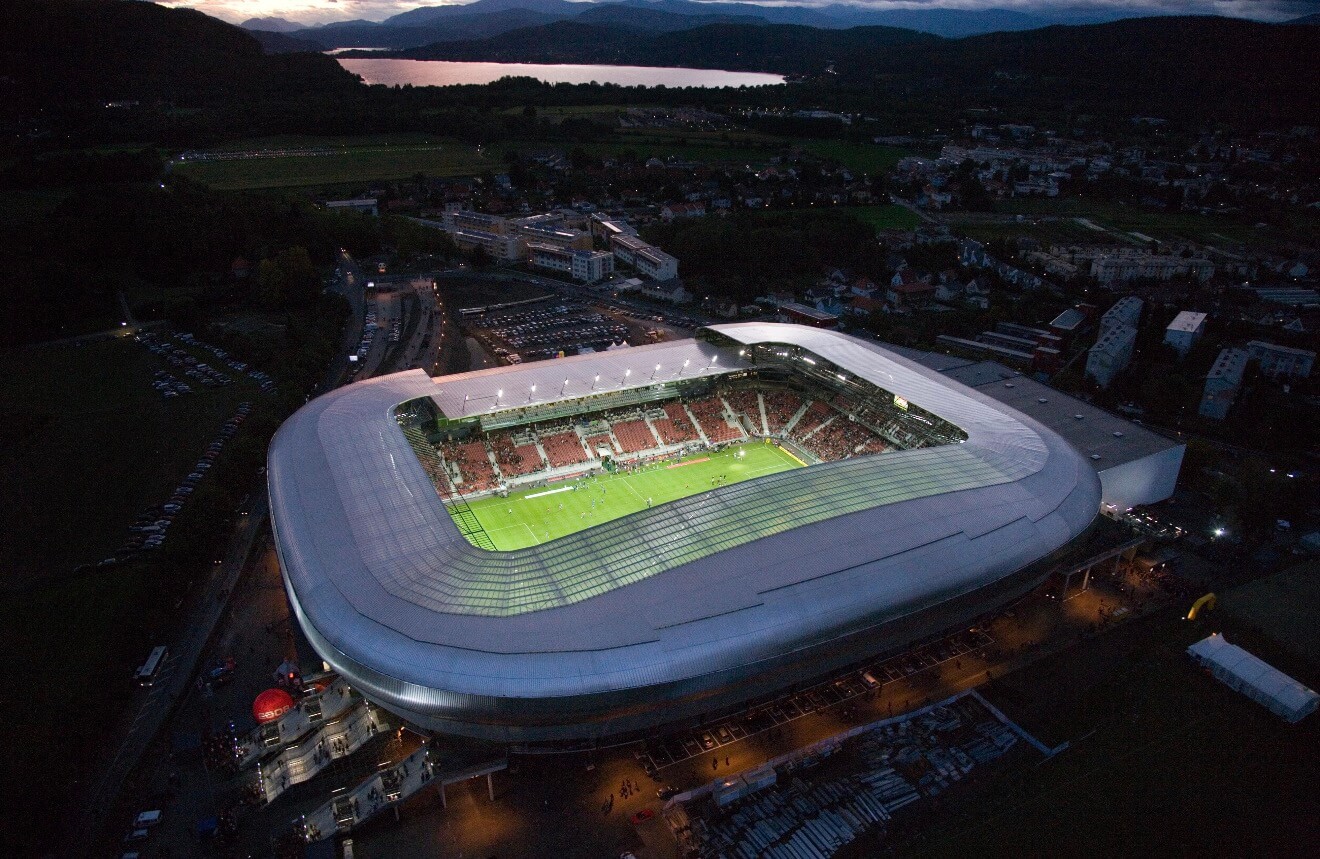
Wörthersee Stadion, Klagenfurt
The Business Of Football Nostalgia
Legends matches were once relatively simple propositions: former players returned to the pitch and supporters bought tickets to see their heroes again.
That model has evolved.
Today, football heritage can sit at the centre of a much broader commercial ecosystem encompassing sponsorship, premium hospitality, tourism, social media, branded content, fan experiences and corporate networking.
That distinction matters.
The commercial value of a player no longer necessarily disappears when the final whistle blows on a professional career.
For the most culturally significant athletes, retirement can instead mark a transition from active sportsman to global intellectual property.
Ronaldinho represents an unusually powerful example.
His football career created the initial audience. Digital media has helped preserve—and in some cases introduce—that identity to entirely new generations.
A supporter who watched Ronaldinho at Barcelona in the 2000s and a teenager who knows him predominantly through YouTube, Instagram and short-form football content can now participate in the same commercial ecosystem.
For event operators and brands, that intergenerational recognition is valuable.
It converts sporting history into contemporary attention.
More Than 90 Minutes
YEA Event and ASG Sports Consultancy & Projects have structured the Klagenfurt programme accordingly.
The experience begins before either team enters the stadium.
On September 25, an exclusive sponsors’ dinner is scheduled to bring together Ronaldinho, participating football personalities, commercial partners and members of the event organisation. Approximately 60 guests are expected to attend the private gathering.
The following day expands the premium-access component.
On September 26, an exclusive Meet & Greet with Ronaldinho at Hotel Seefels in Pörtschach will give selected participants an opportunity to meet the Brazilian personally, take professional photographs and have selected personal items signed.
The commercial logic is straightforward: access itself has become a product.
For an audience accustomed to watching elite athletes through screens, proximity creates scarcity—and scarcity creates value.
Later that afternoon, the focus moves to Wörthersee Stadion.
The gates are scheduled to open at 14:30, with a fan zone incorporating football challenges, entertainment, food and sponsor activation.
A pre-match programme and presentation of the participating football personalities follows from 15:00, before Ronaldinho & Friends and Copa Pelé take to the pitch at 16:00.
Why Klagenfurt Matters
The choice of Carinthia gives the project another commercial dimension.
Wörthersee Stadion offers a stage with capacity for approximately 30,000 spectators, but the geography surrounding it may be equally important.
Klagenfurt sits in southern Austria, with Italy and Slovenia nearby. The location therefore provides access not only to an Austrian domestic audience but potentially to football supporters travelling from neighbouring European markets.
That makes the event relevant to another rapidly developing segment of the sports economy: sports tourism.
Major sporting events generate economic activity well beyond stadium ticketing. Visitors require hotels, restaurants, transport and entertainment. Meanwhile, the host destination receives exposure through conventional media, creator content and the social channels of athletes, sponsors and attendees.
For a tourism-driven region such as Carinthia, the combination of an internationally recognised athlete and a destination experience creates a potentially valuable proposition.
Football becomes the reason to travel; the destination becomes part of the product.
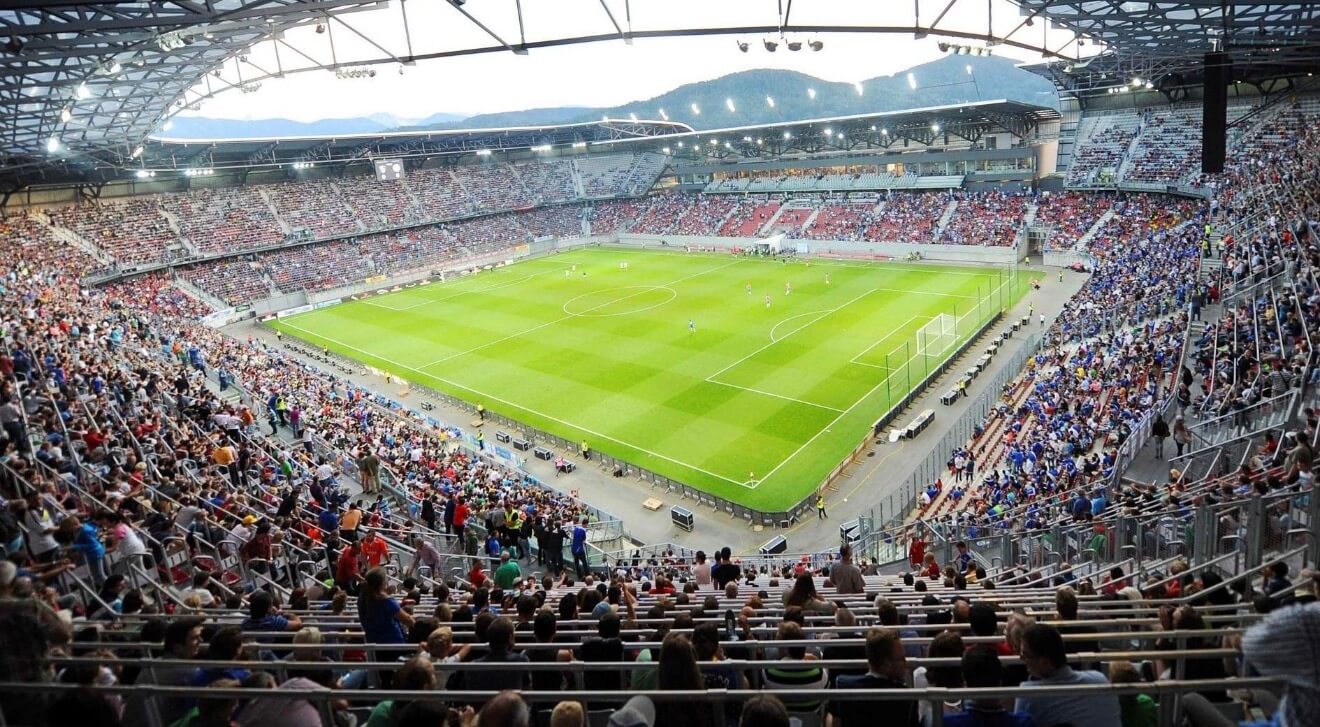
Wörthersee Stadion, Klagenfurt
The Organisers Behind The Project
Producing that product requires substantially more than assembling a team of former players.
YEA Event and ASG Sports Consultancy & Projects are the organisations behind Ronaldinho & Friends vs Copa Pelé, coordinating the sporting and commercial components surrounding the event.
Their role reflects how the live-sports business itself has changed.
Modern event production increasingly requires several industries to operate simultaneously: sports management, talent relations, venue operations, sponsorship sales, hospitality, marketing, media, digital distribution, tourism and experiential entertainment.
The objective is no longer simply to fill seats.
It is to create multiple layers of value around the same sporting property.
For sponsors, that can mean visibility inside the stadium, association with globally recognised football names, hospitality opportunities, digital content and direct consumer engagement.
For VIP guests and corporate partners, it can mean access and networking.
For fans, it means transforming a match ticket into a broader experience.
And for organisers, every additional layer creates another potential commercial asset.